When Should You Replace Your Roof Instead of Repairing It?
Roof age, widespread damage, repeat leaks, and sagging — the criteria that mean replacement beats another repair, and why an inspection confirms it.
The Replace-vs-Repair Criteria
New roof installation, full replacement, and re-roofing — when the maths actually favours replacement, here’s how to recognise it.
Four criteria together usually settle the decision:
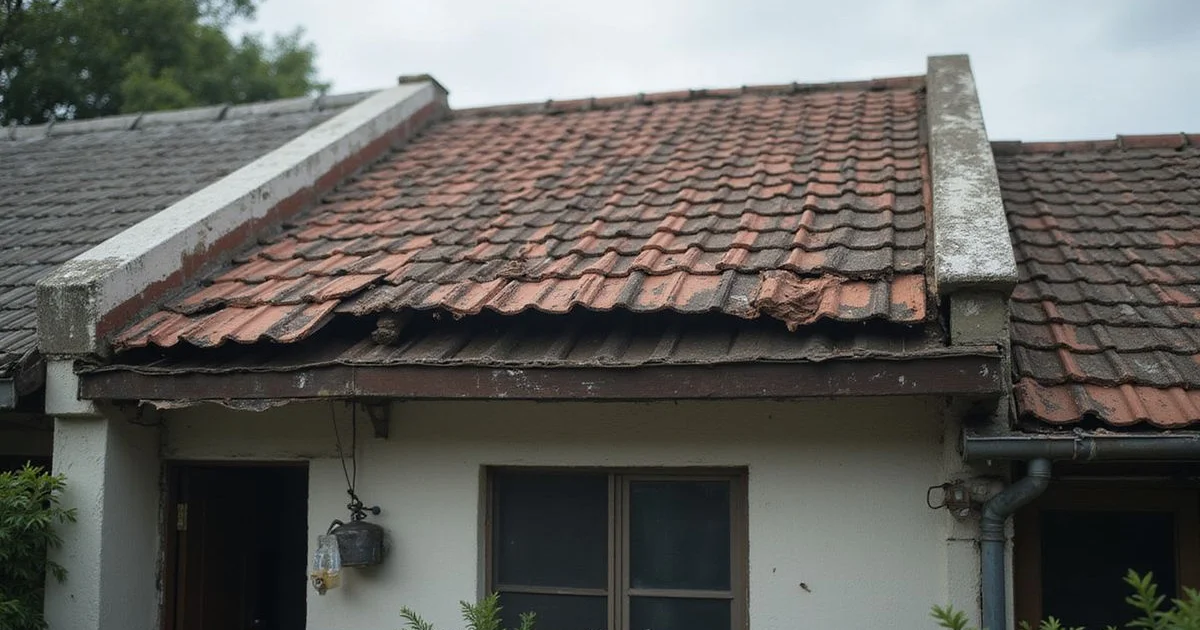
1. Roof age relative to material life. Concrete tile typically lasts 30-40 years in KL conditions. Metal deck 25-35 years. Clay tile 40-50+. If your roof is in the last quarter of its expected life and showing problems, replacement is more sensible than patching.
2. Widespread damage. Cracks in multiple unrelated areas, perished underlay across most of the roof, or generalised tile cracking all point to systemic end-of-life rather than localised problems.
3. Repeat leaks. You’ve patched the same area twice, or had three different leaks across the roof in the last two monsoon seasons. The roof is telling you it’s tired.
4. Sagging. Any visible dip or sag in the roofline — even minor — usually means structural movement. Surface repair won’t fix structural problems.
When two or more of these apply, replacement is the more cost-effective answer. Continued patching becomes false economy.
The Cost-of-Patching Math
The arithmetic that flips most people’s thinking: add up what you’ve spent on repairs in the last three years. If it’s a third or more of what a replacement would cost, you’re in false-economy territory.
Each repair on an aging roof typically holds for a year or two before something else fails. Three RM3,000 repairs in eighteen months means RM9,000 spent — and you’ll likely spend that again in another year or two. Meanwhile, replacement gives you 30+ years of working roof for what amounts to maybe three more repair cycles’ worth of investment.
The other hidden cost is incidental damage. Each leak event damages ceilings, paint, sometimes carpets and furniture and electronics. The full cost of “I’ll just keep patching” is usually significantly higher than the patch invoices alone.
What an Inspection Confirms
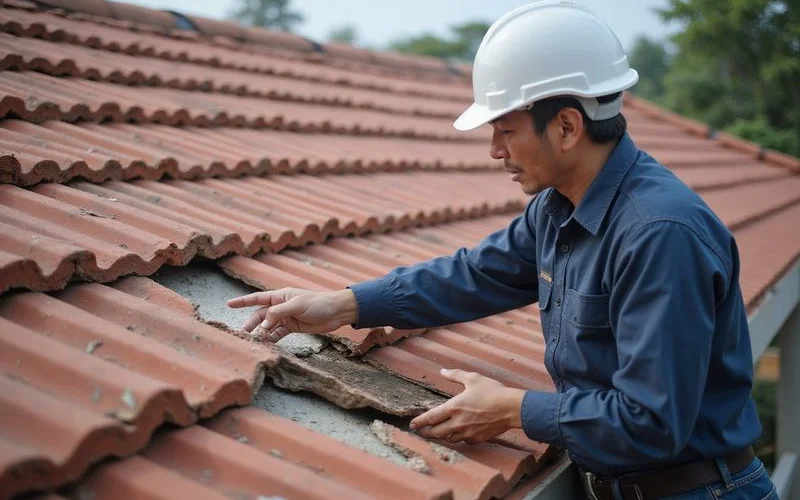
The decision shouldn’t be made from the ground. A proper inspection looks at:
- Tile or sheet condition — surface cracking, lifting, missing pieces, hairline cracking patterns
- The underlay — the membrane beneath the tiles. When this perishes, leaks happen even where tiles look fine. Inspection requires lifting a few tiles to confirm.
- Structural elements — rafters, battens, deck. Movement here means surface work won’t hold.
- Junctions and flashings — chimneys, parapets, roof-to-wall lines, valleys
- Drainage — gutters and downpipes that may be compounding leak problems
After a complete inspection, the answer is usually clear: either there are 2-3 specific issues that can be repaired, or the pattern says the roof is end-of-life and replacement is the honest call.
Material and Warranty Upside of Replacement
A new roof done right offers significant advantages beyond just “no more leaks”:
- Long-term cost. A 35-year roof at a one-time cost amortises better than continuing repairs.
- Modern materials. Underlay, fixings, and roofing systems available today are better than what was used 30-40 years ago. The new roof will outlast the old one.
- Thermal performance. Modern roofing materials and insulation cut tropical heat gain — sometimes by enough to be felt in the rooms below.
- Workmanship warranty. Reputable contractors warranty their installation. There’s no equivalent peace-of-mind on a 30-year-old roof that’s been patched repeatedly.
- Property value. Buyers note roof age. A roof less than 5 years old is a positive at sale; a roof “needing work” is a deduction.
When Repair Is Still the Right Answer
Don’t replace if:
- The roof is less than 20 years old and structurally sound
- The leak is a single discrete source from a discrete event
- The underlay is still good (confirm at inspection)
- Repair budget is sensible relative to the value of what’s being protected
In those cases, a targeted repair is the better call. Replacement before its time is also wasted money.
Frequently Asked Questions
What are the clearest signs I need a new roof?
Can a roof be too far gone to repair?
How long does a new roof last?
Related Guides
Choosing Roof Tiles for Malaysian Weather
Which roof materials handle KL heat, UV, and monsoon best — pros, cons, durability, and maintenance for concrete tile, clay, and metal deck.
How Long Does a Re-Roofing Project Take?
Typical re-roofing timelines by roof size and type, what causes delays in the KL climate, and how to prepare your property for the work.
Metal Deck vs Concrete Tile Roofing in Malaysia
Cost, lifespan, thermal performance, and leak risk of metal deck vs concrete tile roofing — and which suits terrace, bungalow, and commercial buildings.
Re-Roofing vs Roof Recoating — Which Is Right for Your Home?
When a budget recoat is enough and when a full re-roof is necessary — cost, lifespan, and condition guidance for KL homeowners.
Need help with this?
Learn more about our roof installation & re-roofing service, or get a free on-site inspection.