Metal Deck vs Concrete Tile Roofing in Malaysia
Cost, lifespan, thermal performance, and leak risk of metal deck vs concrete tile roofing — and which suits terrace, bungalow, and commercial buildings.
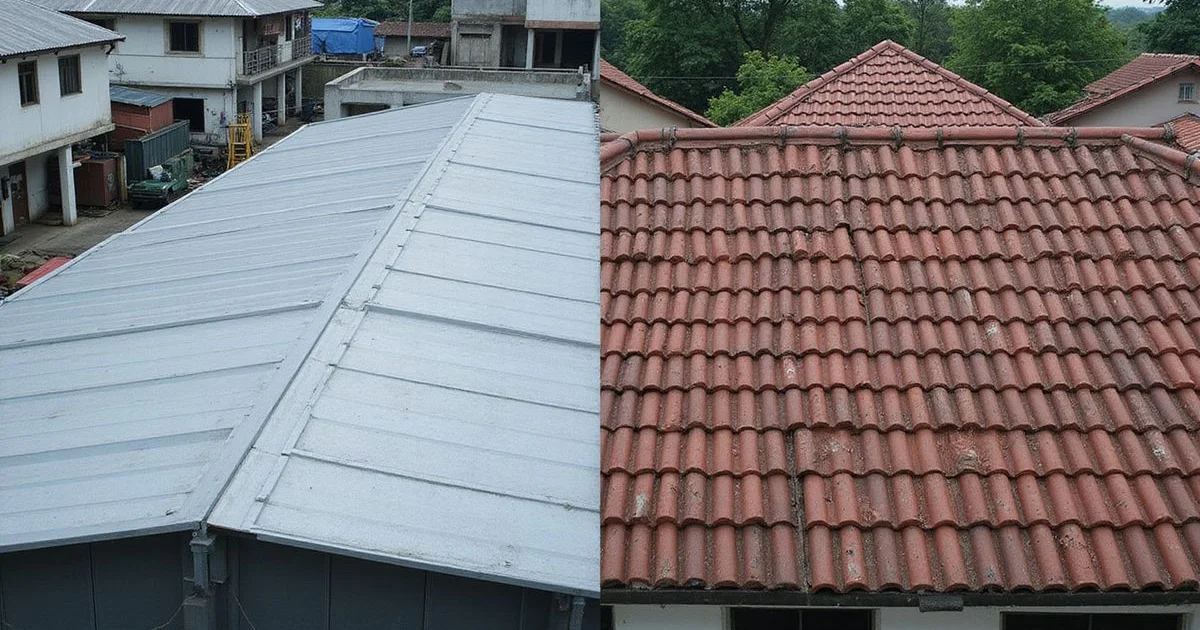
The Direct Comparison
We hear the same debate constantly from property managers and homeowners evaluating a metal vs tile roof in Malaysia, dealing with intense heat and monsoon rains. The choice between a metal deck vs concrete tile roof isn’t just about aesthetics; it dictates your cooling costs and maintenance schedule for the next three decades.
From what we have seen across countless roof installation and re-roofing projects, the true deciding factor is often the building’s structural load limit rather than the material price.
Let’s look at the current 2026 data, break down what these numbers actually mean for your daily operations, and explore how to make the best structural choice.
| Factor | Metal Deck | Concrete Tile |
|---|---|---|
| Cost (installed) | RM 30-100/m² basic; RM 80-200/m² standing seam | RM 50-120/m² standard |
| Lifespan | 25-35 years | 30-40 years |
| Weight on structure | Light (5-10 kg/m²) | Heavy (40-50 kg/m²) |
| Install speed | Fast (large spans efficient) | Moderate (per-tile work) |
| Thermal performance | Needs insulation for residential | Good thermal mass |
| Noise in rain | Higher (mitigated with insulation) | Quiet |
| Best for | Commercial, modern designs, low-pitch | Most KL residential |
The summary reveals that metal deck wins on cost, weight, and install speed. Concrete tile clearly wins on noise control, thermal mass, and that classic residential look. Both options last for decades when properly installed.
Our local suppliers note that modern metal options, like BlueScope Colorbond, now dominate commercial structures. Standard concrete tiles, particularly popular profiles like Monier Elabana, remain the heavy favorite for traditional terrace houses. You will notice these two major material types on almost every street in Kuala Lumpur.
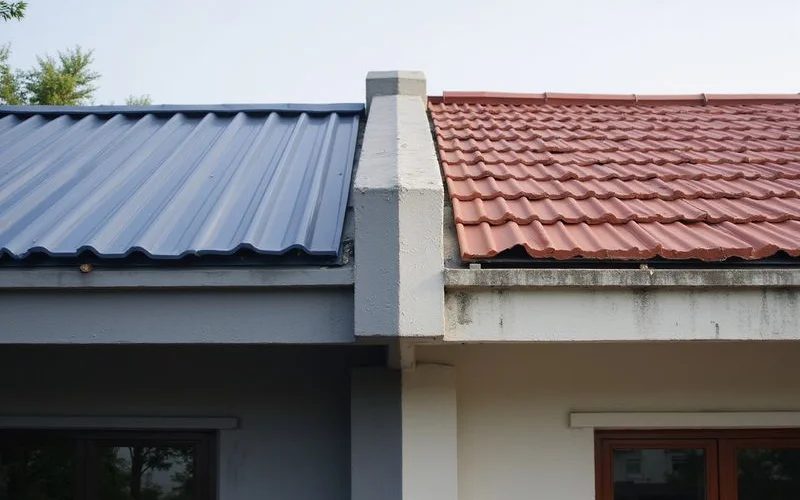
Cost Comparison
We find that the initial price tag often misleads property owners if they ignore the full system specification. The final installed cost depends heavily on your specific roofing layers rather than just the top material.
- Basic color-coated metal deck: This typically remains the cheapest option per square metre installed.
- Premium metal systems: Standing seam designs and thicker gauges price out comparable to or above concrete tile.
- Standard concrete tile: This sits firmly in the middle of the range and remains broadly competitive. For context, a standard Monier Elabana tile runs about RM2.50 per piece in 2026 before installation.
- Specialty concrete profiles: Premium colours and flat Mediterranean profiles push concrete pricing much higher.
Our recent 2026 project data shows that a basic metal deck saves about 20 to 30 percent over standard concrete tile on the material side for a typical single-storey terrace re-roof. That gap narrows significantly once you add essential residential upgrades.
Adding a double-sided radiant barrier foil, like CSR RadenShield, typically costs an additional RM3.50 per square foot. When looking at concrete tile vs metal roofing, you must factor this required insulation into your budget.
Lifespan and Durability
We always remind clients that any roof is only as strong as its weakest component. Both materials offer exceptional durability when properly installed and maintained by experienced crews.
Metal Deck Longevity
Modern coated steel typically holds up for 25 to 35 years before the factory coating starts to fail and the substrate needs attention. Standing seam profiles can last even longer because they hide the fixing points.
The true variable is the coating quality and the joint detailing. Poor joints fail long before the actual metal panels rust through. A common insider warning is that the rubber washers on exposed roofing screws often perish under the Malaysian sun within 10 to 15 years. Replacing these fasteners is a mandatory maintenance step to prevent hidden leaks.
Concrete Tile Endurance
The concrete tiles themselves easily boast a 30 to 40-year lifespan. These heavy pieces often outlast every other element on your property.
Our inspection teams frequently see the underlay causing the real problems. The waterproof sarking positioned beneath the tiles is the component that limits practical lifespan to 20 or 30 years. Once that underlay tears or degrades, the entire roof requires a major overhaul.
Both materials get extended life from strict maintenance routines. Clear your drainage valleys, keep junctions intact, and schedule periodic expert inspections.
Thermal Performance and Leak Risk
We constantly field questions regarding heat transfer when discussing metal options in tropical climates. The reality of thermal performance is far more nuanced than most property managers assume.
Here is how the two materials handle heat:
- Untreated thin metal: This material in full sun gets hot fast and transfers heat quickly downward. This directly fuels the classic trope that metal roofs create ovens.
- Modern coated metal: Panels finished with reflective surface technology reject significant solar radiation. Their performance sits much closer to traditional tile.
- Insulated metal: A metal roof with proper insulation underneath performs comparably to concrete for occupant comfort. Recent 2025 energy studies in Malaysia confirm that combining metal roofing with a radiant barrier and an enclosed air gap provides the highest return on investment, showing a payback period of under five years in commercial settings.
- Concrete tile mass: Concrete possesses natural thermal mass. It absorbs daytime heat slowly and releases it gradually into the night.
Our data indicates that the thermal advantage of concrete is real, but it shrinks considerably once you install 50mm Rockwool insulation beneath a metal deck.
Managing the Risk of Leaks
Leak risk depends almost entirely on installation quality rather than the core material choice. Metal deck can leak at seams, end-laps, fasteners, and flashings. Long continuous spans reduce the total joint count, and precise detailing eliminates most water entry risks.
Concrete tile typically leaks due to displaced pieces, perished underlay, failed flashings, or blocked valleys. The redundant overlapping design of tile and sarking is surprisingly forgiving of minor installation errors.
Both materials installed by experienced professional crews carry a very low leak risk for decades.
Suitability by Building Type
We always match the material to the exact architectural demands of the building. The structural design dictates the best residential roof material far more than personal preference.
Residential Applications
Concrete tile remains the default standard across the Klang Valley. The traditional look, excellent thermal mass, and proven track record make it an easy choice. Metal deck works beautifully if you want a striking modern aesthetic or face strict weight constraints on an older property.
Either material works exceptionally well for standalone homes. Concrete tile suits traditional, heritage, or Mediterranean designs perfectly. Metal roofing, especially high-end standing seam profiles, suits sharp, architect-designed modern properties.
Commercial and Specialized Designs
Our industrial clients almost exclusively select metal deck for their warehouses and factories. Long structural spans, significantly lighter weight, rapid installation speed, and lower total cost heavily favor metal at this massive scale.
We frequently recommend metal deck to handle low pitches, as it performs far better than any concrete option. Concrete tile requires a minimum roof pitch of 25 degrees for rainwater to shed properly without seeping underneath. Metal standing seam systems can safely accommodate pitches as low as 1 to 5 degrees.
Our Take
We actively install both materials and hold no strict preference between a metal deck vs concrete tile roof.
For typical KL residential re-roofing, our team usually quotes concrete tile. This happens because it matches what homeowners expect and aligns perfectly with what the original building was designed to support.
For commercial properties, modern residential builds, or weight-constrained structures, metal deck becomes the obvious answer.
The wrong call is rarely the material itself. A poor installation will ruin the highest quality product on the market.
We focus intensely on getting the installation detailing perfect, regardless of which material you choose. Reach out to our team today to schedule an inspection, and let us help you map out the exact roofing strategy your property needs.
Frequently Asked Questions
Which is cheaper, metal deck or concrete tile?
Which leaks less?
What do commercial buildings usually use?
Related Guides
Choosing Roof Tiles for Malaysian Weather
Which roof materials handle KL heat, UV, and monsoon best — pros, cons, durability, and maintenance for concrete tile, clay, and metal deck.
How Long Does a Re-Roofing Project Take?
Typical re-roofing timelines by roof size and type, what causes delays in the KL climate, and how to prepare your property for the work.
Re-Roofing vs Roof Recoating — Which Is Right for Your Home?
When a budget recoat is enough and when a full re-roof is necessary — cost, lifespan, and condition guidance for KL homeowners.
Roof Replacement Cost for a Terrace House vs Bungalow in Klang Valley
Roof replacement price ranges by property type in the Klang Valley — terrace, bungalow, and commercial — plus the factors and materials that drive cost.
Need help with this?
Learn more about our roof installation & re-roofing service, or get a free on-site inspection.