Why Does My Ceiling Have Water Stains?
Roof leak, condensation, or plumbing? How to tell what's staining your ceiling, why stains spread, and the right next step to stop the source.
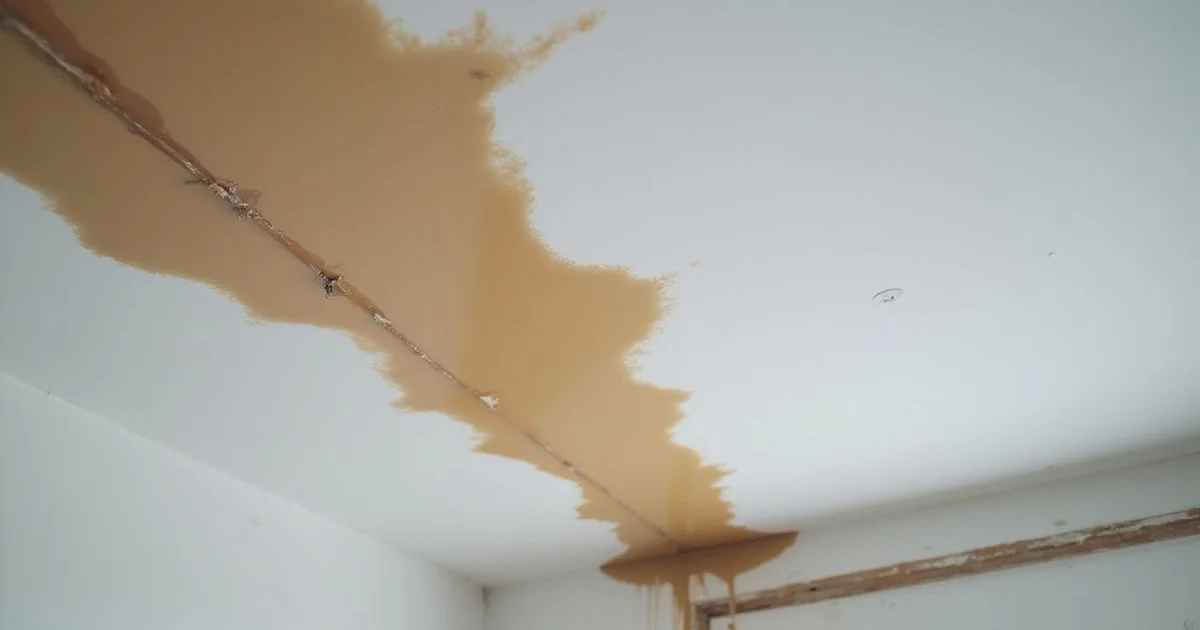
Three Likely Sources
Specialist leak detection and waterproofing — figuring out which of these three sources is at play is the first step. The fix is different depending on which one.
A water stain on your ceiling has three plausible causes, in rough order of frequency:
- A roof leak. Water entering through the roof, travelling along underlay or rafters, and dripping onto the ceiling from above.
- A plumbing leak from above. A leaking pipe upstairs (bathroom waste, water supply, AC drain) running through the ceiling cavity.
- Condensation. Moisture from inside the home or trapped in the cavity, particularly in upper floors with poor ventilation.
How to Tell Them Apart
Timing is the first clue:
- Stain appears or grows during/after rain → almost certainly a roof leak
- Stain appears with no rain, after bathroom or kitchen use upstairs → plumbing leak
- Stain is steady, doesn’t grow with rain, and is associated with humidity → condensation
Location is the second clue:
- Stain directly below a pitched roof, with no plumbing above → roof leak
- Stain below a bathroom, kitchen, or AC unit → plumbing or AC drainage
- Stain near a corner where exterior walls meet, in a poorly ventilated room → condensation
Pattern is the third clue:
- Stain that grows steadily after each rain → active roof leak
- Stain that appears and disappears with bathroom use upstairs → plumbing
- Stain with no clear timing, often with mould patches around it → condensation
Why Stains Spread and Discolour Over Time
Even after the water source stops, the stain itself worsens for a while as residual moisture migrates through the ceiling and as mineral deposits left behind by the water set into the plaster. The brown or yellow colour comes from minerals and organic matter the water has picked up on its journey from the source.
A stain that’s actively growing means water is still arriving. A stain that’s stable or fading means the source has stopped but the ceiling still has residual moisture. A stain that returns periodically is the telltale sign of an intermittent leak — the source is still there, just not always active.
What to Do Next
If the timing strongly suggests rain (stain appears or grows after rain), call a roofing contractor. If it strongly suggests plumbing (stain appears with no rain, especially after upstairs water use), call a plumber. If you can’t tell, a roofing inspection is usually the cheaper and faster first step — most professional roofers can rule the roof in or out quickly with thermal imaging.
In all three cases, the principle is the same: fix the source first, then deal with the cosmetic stain. Painting over an active leak is the most common mistake — you spend money on paint, the stain bleeds back through within weeks, and the underlying problem is still there causing damage.
If the source is the roof, a proper leak detection visit will pinpoint the entry, and a targeted repair will stop the water. After a few weeks of dry weather, the ceiling can be cleaned and repainted permanently.
Frequently Asked Questions
Is a ceiling water stain always a roof leak?
Will the stain go away on its own?
Can I just repaint over a water stain?
Related Guides
Can Roof Leaks Be Repaired in the Rainy Season?
Yes — temporary containment now, permanent repair in weather windows. Why waiting through the KL monsoon makes roof leak damage worse.
How Long Does Waterproofing Last in a Tropical Climate?
Typical lifespan of PU, membrane, and cementitious waterproofing in Malaysia's heat and UV — plus the maintenance that makes it last.
How Professional Roof Leak Detection Works
Visual inspection, thermal imaging, moisture metering, and water-spray testing — how professionals find hidden roof leaks before any repair.
PU Injection vs Traditional Waterproofing for KL Concrete Roofs
How PU injection and membrane waterproofing differ, which suits active concrete-roof leaks vs surface seepage, and when KL contractors combine both.
Need help with this?
Learn more about our roof leak detection & waterproofing service, or get a free on-site inspection.