How Professional Roof Leak Detection Works
Visual inspection, thermal imaging, moisture metering, and water-spray testing — how professionals find hidden roof leaks before any repair.
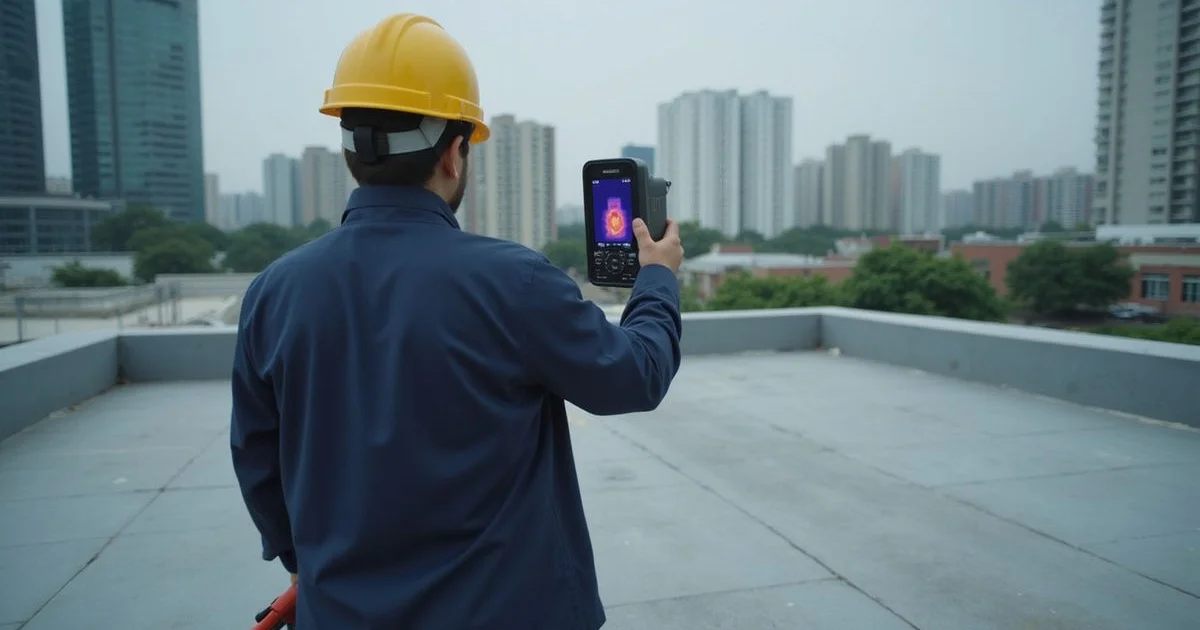
Managing commercial and residential properties in Kuala Lumpur means dealing with severe tropical downpours. Our city experiences an average annual rainfall exceeding 2,800 millimetres, which constantly tests every structural weakness. Finding the exact source of water ingress is a massive challenge for property managers.
We frequently see teams waste thousands of Ringgit chasing symptoms rather than causes. A professional roof leak detection process is the only way to break this costly cycle.
It separates the standard repair attempts from truly permanent solutions, so let’s look at what the diagnostic data actually tells us, and then explore the step-by-step methods to identify these issues correctly.
What Detection Actually Does
We provide Specialist leak detection and waterproofing to ensure exact problem areas are identified before any physical repair begins. The primary goal is to avoid wrong-area excavation that wastes money and ruins an otherwise intact structure.
Water rarely enters a building exactly where the ceiling stain appears. Our diagnostic process bridges the gap between the visible symptom and the hidden entry point.
This entry point is often metres away, sometimes concealed beneath common Kuala Lumpur commercial roofing materials like metal decking or residential concrete tiles. Without proper verification, repairs are just expensive guesswork. For example, water can easily travel five to six metres along steel C-channel roof trusses before finally pooling and dripping through the ceiling.
The Four-Step Process
We utilize a combination of visual analysis and specialised technology to pinpoint structural failures. A systematic approach prevents the costly mistakes associated with blind demolition.
| Diagnostic Method | Primary Tool | Best Used For |
|---|---|---|
| Surface Inspection | Visual Assessment | Spotting obvious cracks, perished sealant, and blocked valleys. |
| Thermal Scanning | FLIR T865 Camera | Finding hidden cold spots and water paths inside concrete. |
| Moisture Mapping | Tramex CMEX5 Meter | Verifying exact water percentages inside building materials. |
| Controlled Spray | Sectional Hosing | Simulating monsoon conditions to find intermittent leaks. |
Step 1: Visual Inspection
Our physical assessment covers both the exterior roof and the affected interior spaces. Technicians inspect the exterior for cracked clay tiles, separated flashing, perished sealant, and blocked valleys.
We then move indoors to trace stains and identify the exact path the water has taken. This phase rules out obvious defects that cause immediate flooding during heavy Malaysian monsoon downpours, and sometimes the source is visible right from the ground.
Our initial sweep typically narrows the search to a specific junction or a particular section of the metal deck roof. These visual clues are vital for planning the next technological steps.
Step 2: Thermal Imaging
We use advanced infrared technology to reveal temperature differences across the building envelope. Infrared cameras highlight areas where water has breached the exterior and is trapped inside the structure.
The wet materials retain heat differently, causing the affected zone to read noticeably cooler than the surrounding dry sections. Our teams rely on industry-standard equipment like the FLIR T865 thermal imaging roof leak camera for these inspections.
This specific model provides a 640x480 resolution, which is critical for spotting tiny temperature variations in large commercial flat roofs. We schedule these scans for the late afternoon when the tropical sun goes down and surface temperatures contrast clearly, as high-resolution imaging often reveals hidden water tracking paths inside concrete slabs that remain entirely invisible to the naked eye.
Step 3: Moisture Metering
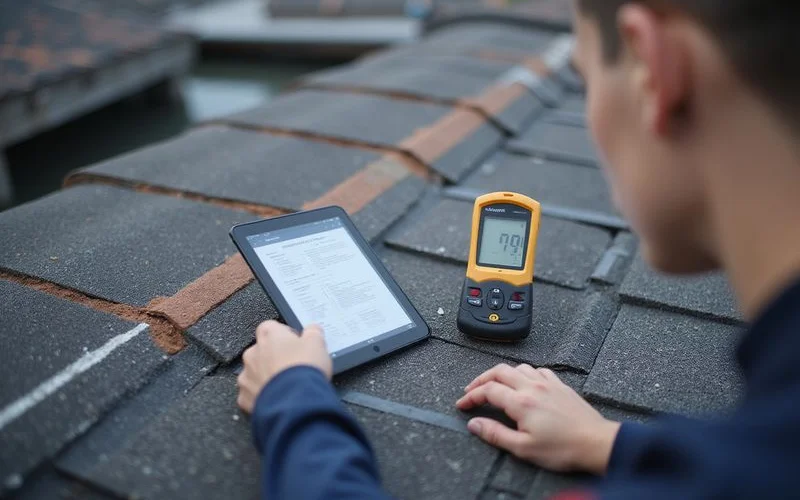
Our technicians follow up the thermal scans with precise surface measurements. Where the infrared camera shows a suspicious cold spot, a specialised meter confirms the actual presence of water.
We use professional devices like the Tramex CMEX5 concrete moisture meter to get a definitive percentage reading. The device measures the precise moisture content within the surface, providing a clear yes-or-no answer about water intrusion at that exact point.
Our process maps out the true extent of the wet area. Accurate moisture data allows estimators to quote the exact scope of the repair correctly. We ensure property owners know exactly how far the water has spread when we find hidden roof leak damage inside their insulation.
Step 4: Water-Spray Testing
We deploy controlled water-spray testing for roofs where the leak only appears during heavy rainfall. This method safely recreates the specific conditions of a severe tropical thunderstorm.
The testing involves dividing the roof into sections and applying a controlled water flow to each area in a strict sequence. We monitor the interior space simultaneously to see exactly when and where the leak appears.
Isolated testing proves which specific feature, such as a faulty flashing joint or a cracked ridge tile, is letting the water through. Our structural engineers find this step essential, as spray testing remains the absolute gold standard for identifying intermittent leaks that simply do not show up under normal conditions.
What a Detection Report Includes
We compile a comprehensive diagnostic document once the site assessment concludes. This formal report gives building owners the hard evidence needed to make informed financial decisions.
After a professional detection visit, you will receive the following deliverables:
- A written inspection summary: Details exactly what our team checked, the specific defects found, and the precise water entry points.
- Annotated photo documentation: Provides clear visual proof of the affected areas, captured using both standard and thermal cameras.
- A specific repair recommendation: Outlines the exact materials required, such as a polyurethane waterproofing membrane, and the correct application method.
- An itemised financial quote: Breaks down the labour and material costs for the recommended restoration work.
- An honest scope evaluation: Dictates whether a localised patch repair, a broader membrane application, or a total roof replacement is the most cost-effective long-term answer.
Our operations team always advises clients to demand this level of detail. If a contractor offers to fix the leak without first explaining the source and their discovery method, you should immediately ask for written proof.
The initial investment in proper detection pays for itself by preventing unnecessary construction work. We regularly help property managers reduce their repair spending by 30% to 40% simply by targeting the right problem the first time.
Why Accuracy Avoids Unnecessary Damage
We strongly caution against traditional exploratory demolition. The outdated alternative to scientific detection involves blindly pulling up tiles, cutting through plasterboard ceilings, and breaking solid concrete just to locate the water source.
This brute-force approach severely damages an otherwise intact roof structure. You end up paying more money to fix the collateral damage caused by the search, and the contractor still frequently misses the real entry point.
Our targeted methodology eliminates this destructive guesswork entirely by isolating and touching only the exact area identified as the active leak source.
The team repairs the specific defect cleanly using appropriate sealants or membranes. We then rerun the thermal and moisture diagnostics to guarantee the structural envelope is fully sealed.
This verified confirmation is the true value of professional roof leak detection. Contact our team today to schedule your comprehensive diagnostic scan and protect your building from further water damage.
Frequently Asked Questions
Does leak detection damage my roof?
How long does leak detection take?
Can you detect a leak while it's raining?
Related Guides
Can Roof Leaks Be Repaired in the Rainy Season?
Yes — temporary containment now, permanent repair in weather windows. Why waiting through the KL monsoon makes roof leak damage worse.
How Long Does Waterproofing Last in a Tropical Climate?
Typical lifespan of PU, membrane, and cementitious waterproofing in Malaysia's heat and UV — plus the maintenance that makes it last.
PU Injection vs Traditional Waterproofing for KL Concrete Roofs
How PU injection and membrane waterproofing differ, which suits active concrete-roof leaks vs surface seepage, and when KL contractors combine both.
Roof Leak Repair vs Full Waterproofing — Which Do You Need?
When a spot repair is enough and when full waterproofing is worth it — recurring-leak warning signs and honest cost framing for KL roofs.
Need help with this?
Learn more about our roof leak detection & waterproofing service, or get a free on-site inspection.