Signs Your Concrete Roof Is Leaking
Ceiling stains, damp patches, peeling paint, and musty smells — how to spot a concrete roof leak early in your KL home and what to document.
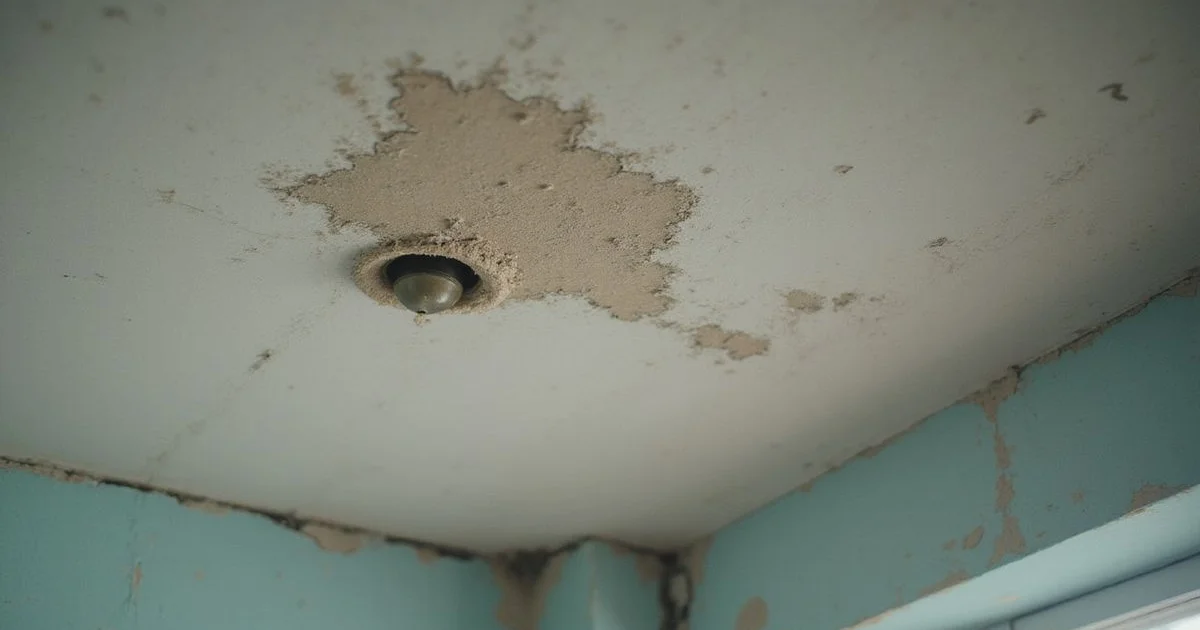
We know exactly how frustrating an invisible leak can be for property managers.
The ceiling shows an ugly stain, but the flat slab directly above it looks perfectly fine. Our technicians face this specific challenge across Kuala Lumpur every single monsoon season. Finding the actual water entry point remains the hardest part of the job.
We rely on Specialist leak detection and waterproofing to trace that hidden migration path. Understanding these signs of concrete roof leak separates a minor RM500 patch job from a massive structural repair. Our team will break down the precise visual cues you need to check right now, exploring why the local climate hides these defects.
What to Look For: Signs of Concrete Roof Leak
We always tell clients that the first warnings appear inside the building, not on the roof itself. Spotting these internal red flags early is the only way to prevent major structural damage. Our typical inspection starts by checking the ceilings and upper walls for five distinct symptoms.
- Ceiling stains: Look for brown or yellow patches, often roughly circular, that appear or grow after heavy rain.
- Damp patches: You might notice areas of the ceiling that feel cooler or look noticeably darker than the surrounding plaster.
- Peeling or bubbling paint: This happens because trapped moisture breaks the paint bond from behind the surface.
- Musty post-rain smell: A damp odour indicates water has wetted the underside of the slab or the enclosed ceiling cavity.
- Salt deposits (efflorescence): White powdery residue on the concrete underside confirms that water has been actively moving through the porous material.
Property owners frequently miss the efflorescence because it looks like ordinary dust. Our technicians use targeted Polyurethane (PU) grouting to seal the exact entry point when you catch these issues early. The image below shows exactly what to look for during your next inspection.
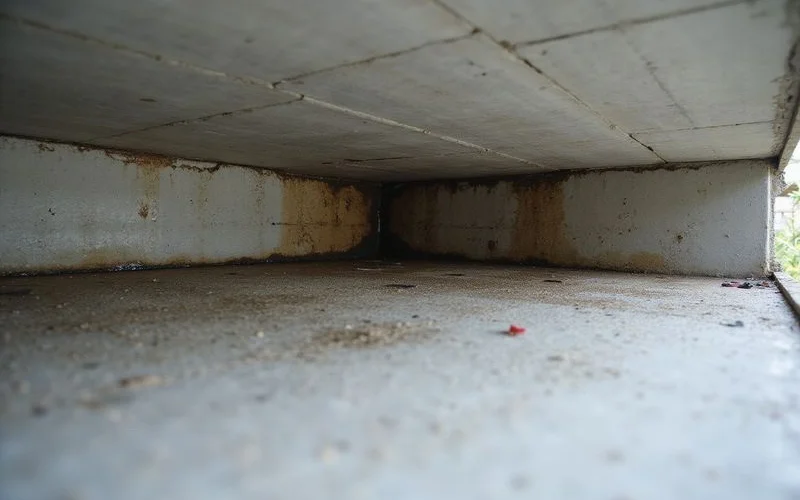
Why Concrete-Slab Leaks Hide
We find that many people misunderstand how water interacts with building materials. Concrete behaves very differently from a traditional tile or corrugated metal sheet roof. Our structural assessments confirm that concrete is naturally porous and absorbs water in small amounts. The water rarely just drips straight down through a single visible hole.
We track this hidden movement to explain why the stain on your ceiling often appears metres away from the actual roof defect. This hidden migration path means concrete roof leak symptoms tend to stay silent for a long time.
“In tropical climates, thermal shock is the hidden enemy. A 32°C roof rapidly cooled by a monsoon downpour will inevitably crack and draw water inward.”
Our teams see local weather conditions in Kuala Lumpur making this problem significantly worse. The city receives over 2,500mm of annual rainfall, which creates massive pooling on uneven flat surfaces. We measure high humidity levels constantly sitting above 60%, preventing the material from drying out completely between storms. Intense thermal shock causes the most severe, hidden damage.
We warn clients that by the time the ceiling stain becomes obvious, the slab has likely been wet for months. The internal reinforcing steel will have already started to silently corrode inside the concrete.
Urgency: What Worsens If Ignored
We strongly advise against delaying repairs, as untreated moisture aggressively degrades the building’s structural integrity. A minor surface patch might cost between RM300 and RM500 in Malaysia, while severe structural neglect pushes bills beyond RM5,000. Our commercial repair data shows that untreated leaks compound and destroy property value in three specific ways.
1. The Leak Source Widens
Water flowing through a hairline crack progressively enlarges the opening over time. We observe that the constant cycle of hot days and heavy monsoon rains causes significant structural movement. A leak left for two rainy seasons leaks exponentially worse than the exact same defect left for one.
2. Reinforcement Steel Corrodes (Spalling)
We frequently encounter a dangerous condition called concrete spalling during advanced inspections. Steel rebar inside the slab corrodes once it gets wet, expanding up to four times its original volume. Our engineers see this expanding rust physically break off, or spall, heavy chunks of concrete from the ceiling below. This exposes the core steel to direct air, which then accelerates the rust until the entire slab requires total replacement.
3. Interior Damage Compounds
We constantly see secondary damage ruin expensive interior fit-outs. Ceiling plaster degrades quickly, expensive paint jobs fail repeatedly, and toxic mould develops deep inside the cavity. Our electricians warn that active water running near ceiling lighting fixtures creates a severe fire and electrocution hazard. Fixing the roof later will not cover the cost of replacing your damaged electrical wiring and ruined interior finishes.
What to Document Before You Call
We highly recommend completing a short, five-minute documenting exercise before picking up the phone. Gathering basic facts saves immense time during the initial site inspection. Our technicians can diagnose the issue much faster and provide a sharper quote when they have accurate background details.
| What to Document | Why It Helps the Contractor |
|---|---|
| Photograph each stain | Shows exact location, wall direction, and scale of the water spread. |
| Note the timing & weather | Connects the leak to specific monsoon conditions (steady rain vs. sudden downpour). |
| Observe any patterns | Determines if the moisture moves, which indicates pooling water on the flat roof. |
| Check the attic space | Reveals direct moisture on the underside of the slab before it hits the plaster. |
| Verify roof type and age | Concrete slabs older than 15 years often need specialized structural grouting. |
The most valuable insider tip involves checking for obvious water pooling on the roof surface right after an afternoon storm. We use this specific information to instantly identify the lowest point where drainage has failed. Your preparation ensures less time spent on site and significantly lowers the final diagnostic labour fees. Our roofing teams rely on this exact documentation to bypass hours of unnecessary testing.
Fixing a spot concrete roof leak kl before it spreads is the single best way to protect your property investment. We hope this guide helps you catch the early signs of concrete roof leak before they escalate into major structural issues.
“Ignoring a small water stain today guarantees a massive concrete repair bill tomorrow.”
A quick response avoids massive repair bills and keeps your building completely safe. Our experts are ready to assist if you need professional leak tracing and sealing in the Kuala Lumpur area.
Contact a specialized waterproofing contractor today to schedule a comprehensive slab inspection.
Frequently Asked Questions
How do I know if it's a roof leak or condensation?
What does a serious concrete roof leak look like?
Should I cover a leak myself first?
Related Guides
Can Roof Leaks Be Repaired in the Rainy Season?
Yes — temporary containment now, permanent repair in weather windows. Why waiting through the KL monsoon makes roof leak damage worse.
How Long Does Waterproofing Last in a Tropical Climate?
Typical lifespan of PU, membrane, and cementitious waterproofing in Malaysia's heat and UV — plus the maintenance that makes it last.
How Professional Roof Leak Detection Works
Visual inspection, thermal imaging, moisture metering, and water-spray testing — how professionals find hidden roof leaks before any repair.
PU Injection vs Traditional Waterproofing for KL Concrete Roofs
How PU injection and membrane waterproofing differ, which suits active concrete-roof leaks vs surface seepage, and when KL contractors combine both.
Need help with this?
Learn more about our roof leak detection & waterproofing service, or get a free on-site inspection.