What Is Roof Recoating and How Does It Extend Roof Life?
Roof recoating cleans, primes, and protects your roof to extend its life and cut heat — what it involves and which roof conditions suit it.
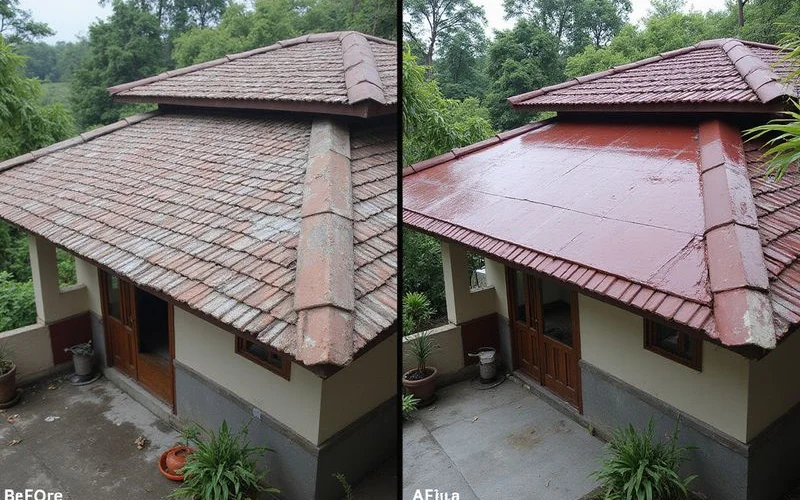
What Recoating Actually Does
Roof recoating and rejuvenation — a surface treatment that restores appearance and adds protective performance to a sound underlying roof.
Roof recoating is not the same as just repainting. It’s a multi-stage process designed to clean the roof surface back to a sound substrate, lock it with primer, then apply protective coatings that restore appearance and add functional benefits (heat reflection, water-shedding, UV resistance).
A properly recoated roof:
- Looks freshly finished from the ground
- Reflects more tropical UV than untreated tile (cooler rooms below)
- Sheds water more cleanly (better drainage during rain)
- Resists biological growth (less moss and algae)
- Adds 5-8 years of effective service life
What recoating doesn’t do: fix structural problems, seal active leaks, or rescue a roof whose underlay has perished. These are limits of what surface treatment can address.
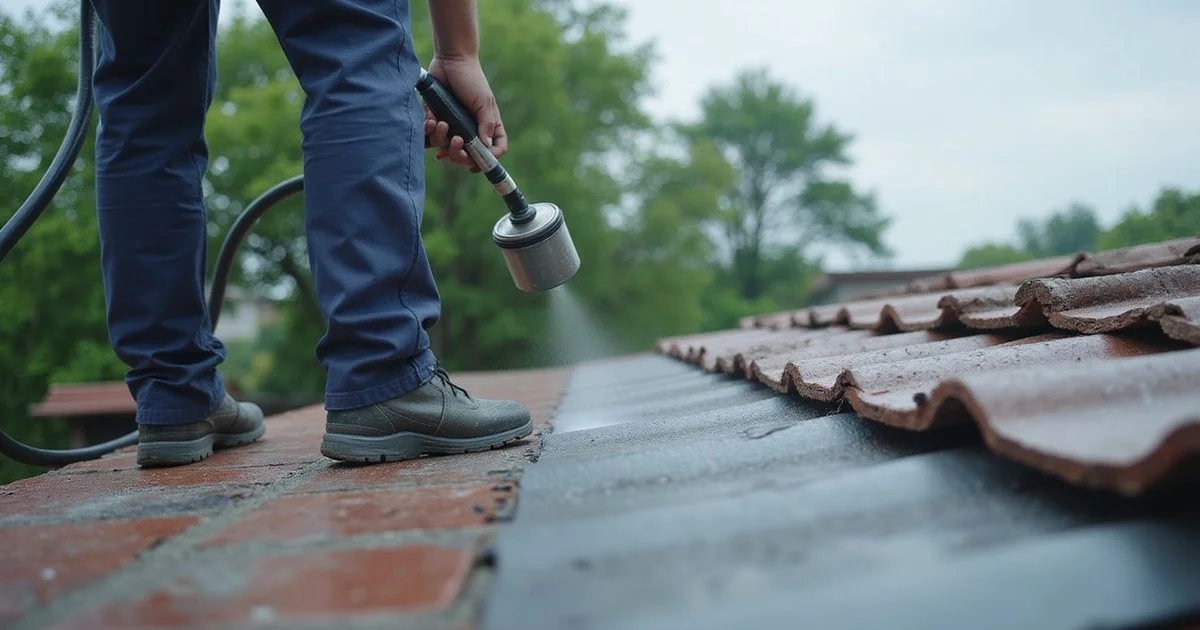
The Recoating Process
The work breaks into four stages:
1. Pressure cleaning. The roof is washed with high-pressure water to remove algae, moss, oxidation, and any loose surface material. The pressure cleaning is the most important step in the process — coatings that fail early almost always fail because of poor surface prep. The roof needs to be completely clean before anything else happens.
2. Drying and inspection. After cleaning, the roof needs to dry fully before primer goes on. In KL we work around the rain — applying primer to a wet substrate is a guaranteed early failure. While drying, we re-inspect for any defects revealed by the cleaning (cracked tiles, loose ridge caps) and address them.
3. Priming. A dedicated primer is applied to the cleaned, dry substrate. The primer locks the surface, gives the topcoat something to bond to, and provides the first layer of water resistance. Skipping or skimping on primer is another classic cause of early coating failure.
4. Top-coating. The protective topcoat is sprayed in even passes. Most systems require two coats for full coverage and protection. Heat-reflective topcoats add the thermal benefit; standard topcoats focus on appearance and water resistance.
How It Protects Tiles and Reduces Heat
Concrete tiles age primarily through two mechanisms: UV degradation of the surface and water absorption causing freeze-thaw stress and biological growth. Both happen continuously in KL conditions.
A quality protective coating:
- Reflects UV — slowing surface degradation and reducing thermal stress
- Sheds water — preventing the moisture cycling that supports biological growth
- Adds a sacrificial layer — the coating wears, not the tile beneath
- Creates a sealed surface — reducing porosity that lets water and contaminants into the tile body
Heat-reflective coatings add the thermal benefit. By reflecting a higher percentage of solar radiation, they reduce roof surface temperatures by 5-15°C in peak conditions. This translates to lower attic temperatures and reduced aircon load in the rooms below.
Which Roof Conditions Suit Recoating
Recoating is the right call when:
- The roof is structurally sound — no sagging, no movement
- The underlay is intact — leaks aren’t getting past intact-looking tiles
- The tiles themselves are sound — no widespread cracking or failure
- There are no active leaks — or any leaks have been properly repaired
- The surface is faded, chalking, or visually aged — what recoating actually addresses
Recoating is the wrong call when:
- The underlay has perished (you’d be coating a leaking roof)
- There’s visible structural movement
- Repeated repairs have been needed across the roof
- The tiles are widely damaged
- The roof is approaching natural end of life
When recoating fits, it’s excellent value — 5-8 years of extended service at roughly 20-30% of the cost of full replacement. When it doesn’t fit, it’s money thrown at a problem that needs a different solution. The honest call comes from inspection.
Frequently Asked Questions
Is recoating the same as repainting a roof?
Does recoating stop leaks?
How long does recoating take?
Related Guides
How Often Should a Roof Be Recoated in Malaysia?
Typical recoat intervals for tropical Malaysian roofs, the UV and rain factors that shorten them, and the signs a recoat is due.
Roof Recoating vs Roof Replacement — Cost and Lifespan Compared
Cost difference, lifespan added, and the condition thresholds that decide between a budget recoat and a full roof replacement in KL.
Need help with this?
Learn more about our roof recoating & rejuvenation service, or get a free on-site inspection.