How Facade and Roof Leaks Are Connected
Why roofline-to-wall junctions leak, why fixing one without the other fails, and how an integrated building-envelope approach stops the problem.
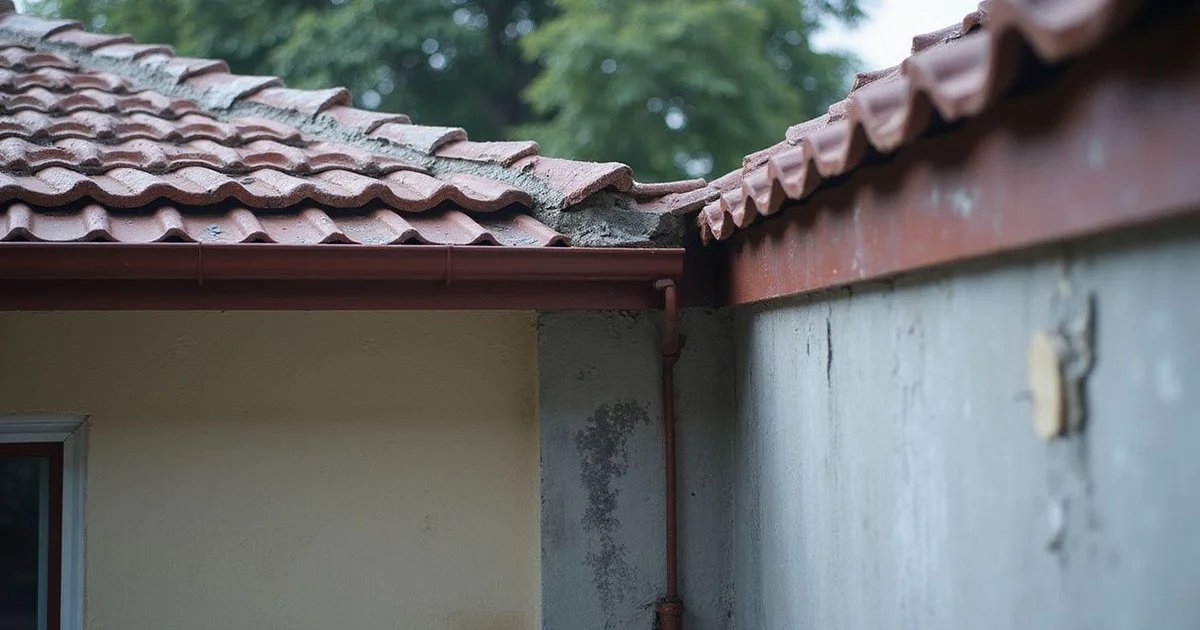
It is a familiar scenario for any property manager dealing with sudden water stains. You inspect the ceiling, yet the actual source of the moisture is nowhere to be found.
A 2025 joint study by Nippon Paint Malaysia and MIPFM revealed that 90% of respondents experienced roof or wall seepage. The culprit is almost always hidden within the roof-to-facade junction.
We frequently see this exact challenge across KL commercial and multi-storey residential buildings. Resolving these persistent facade and roof leaks requires looking beyond standard Building facade services.
Let’s examine why these complex junctions fail and explore a systematic way to permanently stop the water.
The Single Most Common Leak Source: Facade and Roof Leaks
The basic geometry of a structure naturally creates this vulnerability. A distinct junction forms wherever the roof meets the wall, whether at the eaves, parapets, or any intersecting plane.
Our local climate places immense stress on these exact connection points. Kuala Lumpur experiences peak daytime temperatures around 45°C, causing flat roofs to rapidly expand during the day and contract at night.
This continuous thermal movement slowly tears apart flashing, sealant, and copings. Water easily slips inside once those protective barriers fail.
We often see the resulting moisture travel for metres behind exterior cladding before showing up as an interior wall stain.
Why Fixing One Without the Other Fails
Fixing only one side of the structure fails because the actual water entry point sits squarely between them. A worried owner usually calls a traditional roofer to investigate a mysterious wall stain on the top floor. The roofer checks the main flat roof area and declares it perfectly intact.
We see this happen because the entry point sits entirely off the main roof field. The contractor either performs cosmetic patches that offer no real help or simply walks away.
The leak inevitably continues during the next heavy downpour. The frustrated owner then hires a exterior wall specialist.
Our experience shows that this second contractor will find intact cladding, blame the roof, and leave the situation unresolved.
The Problem with Single-Trade Inspections
These endless cycles occur because standard contractors only look at their specific scope of work. Water frequently travels beneath screed layers on reinforced concrete (RC) roofs. The visible crack is rarely the true source of a wall leak from roof entry points.
We use drone thermal inspections and handheld moisture detectors to trace these hidden pathways. This modern diagnostic approach eliminates the need for destructive hacking or expensive scaffolding. A perished parapet coping or a cracked junction sealant will remain unrepaired until someone examines the complete system.
The Integrated Building-Envelope Approach
The only permanent fix is treating the roof and facade as a single continuous system. This combined barrier is known as the building envelope. It includes the roof, walls, windows, and all the critical junctions connecting them.
Our methodology requires crossing traditional trade boundaries during every inspection. Malaysia receives over 250 cm of intense tropical rainfall annually. This massive volume of water will immediately exploit any tiny structural building envelope leak.
We verify both sides of the junction to ensure complete watertight integrity.
Comprehensive Envelope Checklist
Property managers need a clear framework for these complex evaluations. The table below outlines the specific elements that require simultaneous assessment.
| Inspection Zone | Key Components to Verify | Common Failure Points |
|---|---|---|
| Roof Side | Tiles, sheets, underlay, flat RC decks, valleys | Shifted tiles, ponding water, rusted metal decking |
| Facade Side | Cladding, plaster, sealant, expansion joints | Cracked rendering, failed window-head sealant |
| The Junction | Flashing terminations, parapet copings, joint sealant | Perished waterproofing membranes, separated flashings |
Single-trade contractors simply do not run this type of cross-boundary diagnostic. The root cause of most mystery leaks hides within these exact meeting points.
Our team routinely solves a complex roof facade junction leak by applying this unified approach.
Examples of Envelope Failures in KL Buildings
Specific architectural designs in our region suffer from predictable patterns of failure. Recognising these common issues helps owners act before major structural damage occurs.
We regularly encounter five distinct scenarios across local properties.
- Parapet coping failures on flat-roofed shoplots: Water enters the parapet from above and runs down inside the masonry cavity. It eventually shows as an unsightly stain on the upper-floor interior wall.
- Roof-to-wall flashing failures on terrace houses: This happens frequently where a roof meets a higher neighbouring party wall. Water enters at the torn flashing, runs along the underlay, and drips onto a ceiling several metres away.
- Stairwell wall leaks in apartment blocks: These almost always trace back to the roof-to-wall junction at the top of the stairwell structure. Maintenance crews commonly miss this elevated area during standard visual inspections.
- Window-head leaks on commercial facades: Rainwater enters at the top of the window frame from a separate exterior defect located much higher up. The moisture runs invisibly behind the cladding before pooling inside the office space.
- High-rise corner leaks: Two separate exterior elevations meet at a sharp building corner. A junction sealant failure here lets high-wind rain track in highly unpredictable patterns across the floor plates.
Taking Action on Hidden Leaks
The visible symptom in all these examples sits far away from the actual entry point. Resolving the crisis requires a data-driven diagnostic approach.
We highly recommend using thermal imaging rather than relying on guesswork. Stop paying for temporary patches that ignore the complex physics of water movement. Property owners must demand an inspection that evaluates both sides of the envelope.
Our combined expertise ensures you can finally stop those frustrating facade and roof leaks for good. Reach out to schedule a comprehensive assessment before the next heavy downpour.
Frequently Asked Questions
Can a wall leak actually come from the roof?
Why do other contractors miss these leaks?
Do you handle both roof and facade together?
Related Guides
ACP Cladding vs Plaster Facade Repair
Appearance, durability, cost, maintenance, and weatherproofing of ACP cladding vs plaster facade repair — and which suits your building.
Common Facade Problems in KL High-Rise Buildings
Cracking, delamination, sealant failure, water ingress, and ACP panel issues — the facade failure modes KL property managers should watch for.
What to Expect During a Facade Restoration Project
Assessment, access setup, cleaning, repair, and sign-off — the stages of a facade restoration and the occupant considerations for KL buildings.
Need help with this?
Learn more about our building facade services service, or get a free on-site inspection.